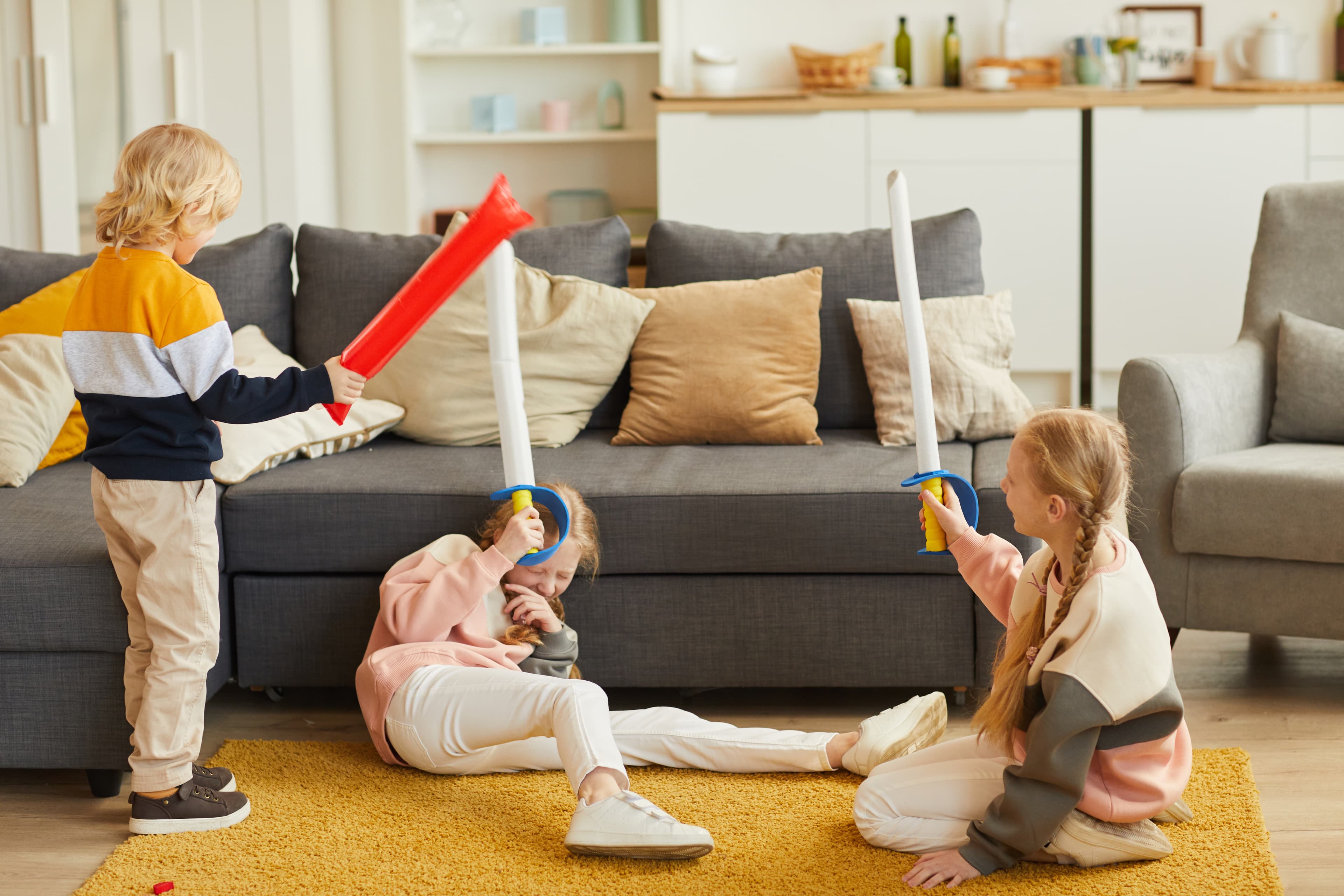
Keeping kids active indoors sounds simple until you're staring down a rainy afternoon, a bored six-year-old, and a living room that's somehow already a disaster zone. Screen time creeps in because it's easy, it's quiet, and it works, until it doesn't. At Little Groovers, we've spent a lot of time thinking about what actually gets kids moving, thinking, and engaged when going outside isn't an option.
This isn't a list of toys someone threw together for clicks. It's a real guide built around how kids develop, what keeps them genuinely interested, and what parents can actually use without turning their home into a gym. Whether you're looking for the best indoor active toys for babies and toddlers, games that sharpen focus, ADHD-friendly activities, or ways to support your child's mental health through play, it's all here, broken down by age and purpose.
Let's start with the basics: getting kids moving.
Best Indoor Active Toys for Babies and Toddlers
Babies and toddlers don't need complicated setups. What they need is safe, simple movement that supports their development without overwhelming them. The best toys at this stage do two things at once, they get little bodies moving and they quietly teach coordination, balance, or sensory awareness along the way.
Toys That Build Movement from the Start
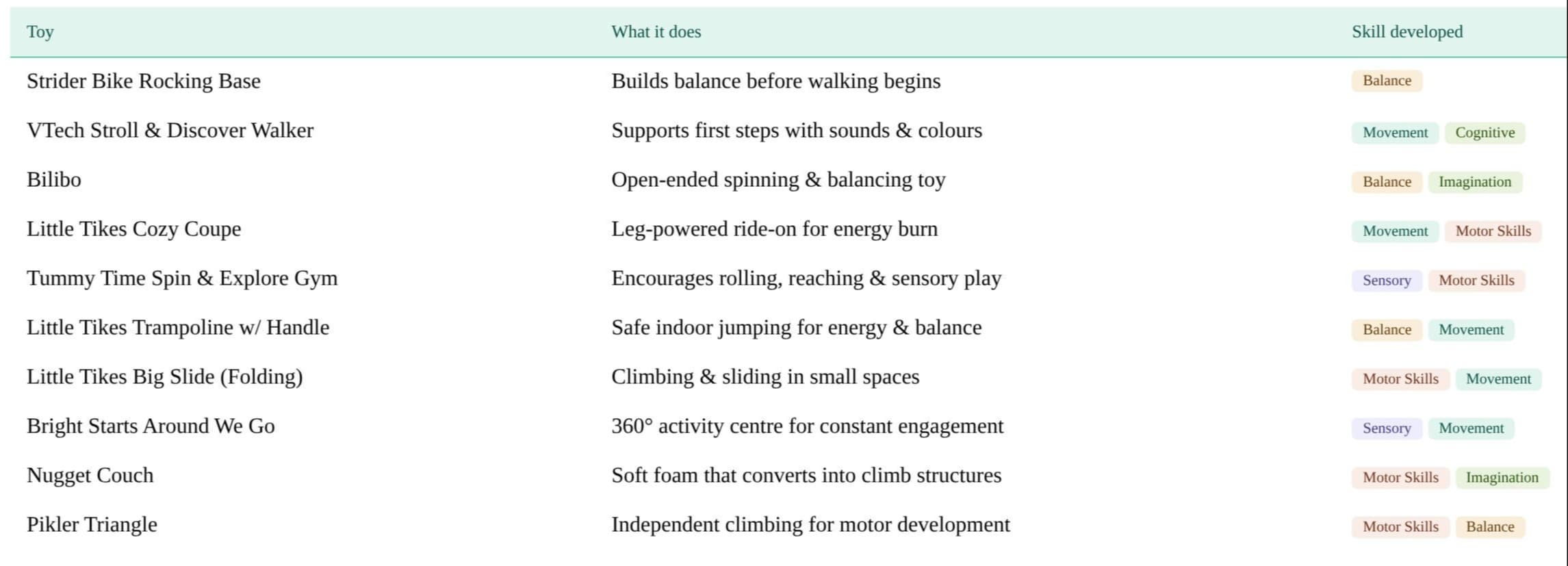
Strider Bike Rocking Base is one of those things you don't expect to love until you watch a baby light up on it. It helps babies develop balance before they're even walking. The rocking motion strengthens core muscles and builds the kind of confidence that carries over into everything else.
VTech Stroll & Discover Activity Walker supports first steps in a way that feels exciting rather than scary. Kids push it across the floor while it introduces sounds, colors, and shapes, so they're physically active and mentally engaged at the same time. It's a solid pick for parents who want their child's first independent steps to come with a little extra stimulation.
Bilibo deserves more attention than it gets. It's a curved plastic shell that looks like almost nothing, which is exactly why kids love it. They spin in it, sit on it, flip it over, and balance on it. There's no instruction manual. The toy just exists and kids figure out what to do with it, which is the point.
Little Tikes Cozy Coupe is a classic for a reason. Toddlers use their legs to push themselves around, which builds leg strength and burns energy without them realizing it. It's one of those toys that survives multiple kids in the same household because it's genuinely simple and endlessly useful.
Tummy Time Baby Spin & Explore Gym is designed for the earliest months. It encourages rolling, reaching, and sensory exploration, all things that support the neurological development happening fast at that age. If your baby resists tummy time, a gym like this gives them something worth looking at and reaching for.
Little Tikes Trampoline with Handle brings the bounce indoors safely. Jumping does a lot more than burn energy. It helps kids develop spatial awareness, improves balance, and gives the nervous system input it genuinely needs, especially for kids who tend to be more sensory-seeking.
Little Tikes Big Slide (Folding) is ideal if you're working with limited floor space. It folds flat when you're done, but while it's out, kids are climbing, sliding, and doing it again. The repetitive motion is actually self-regulating for a lot of toddlers, it helps them settle into a rhythm.
Bright Starts Around We Go is a 360-degree activity center that keeps babies circling, reaching, and discovering. It's one of those items that earns its floor space because babies will spend real stretches of time with it.
Nugget Couch has become something of a cultural phenomenon among parents of young kids, and for good reason. It's soft foam furniture that rearranges into climbing structures, tunnels, and forts. Kids build with it, climb it, and launch themselves off it. Parents keep it around because it looks normal enough in a living room.
Pikler Triangle is worth every inch of the space it takes up. It's a simple wooden climbing frame based on the work of Hungarian pediatrician Emmi Pikler, who believed children develop best when allowed to move freely and independently. The triangle supports motor skill development and lets kids challenge themselves at their own pace.
Best Indoor Active Toys for Older Kids
Once kids hit school age, they need more challenge. The toys that worked at two years old aren't going to hold a seven-year-old's attention. What works at this stage is anything that requires effort, involves a skill they can actually get better at, or gives them a sense of accomplishment.
Toys That Challenge and Engage
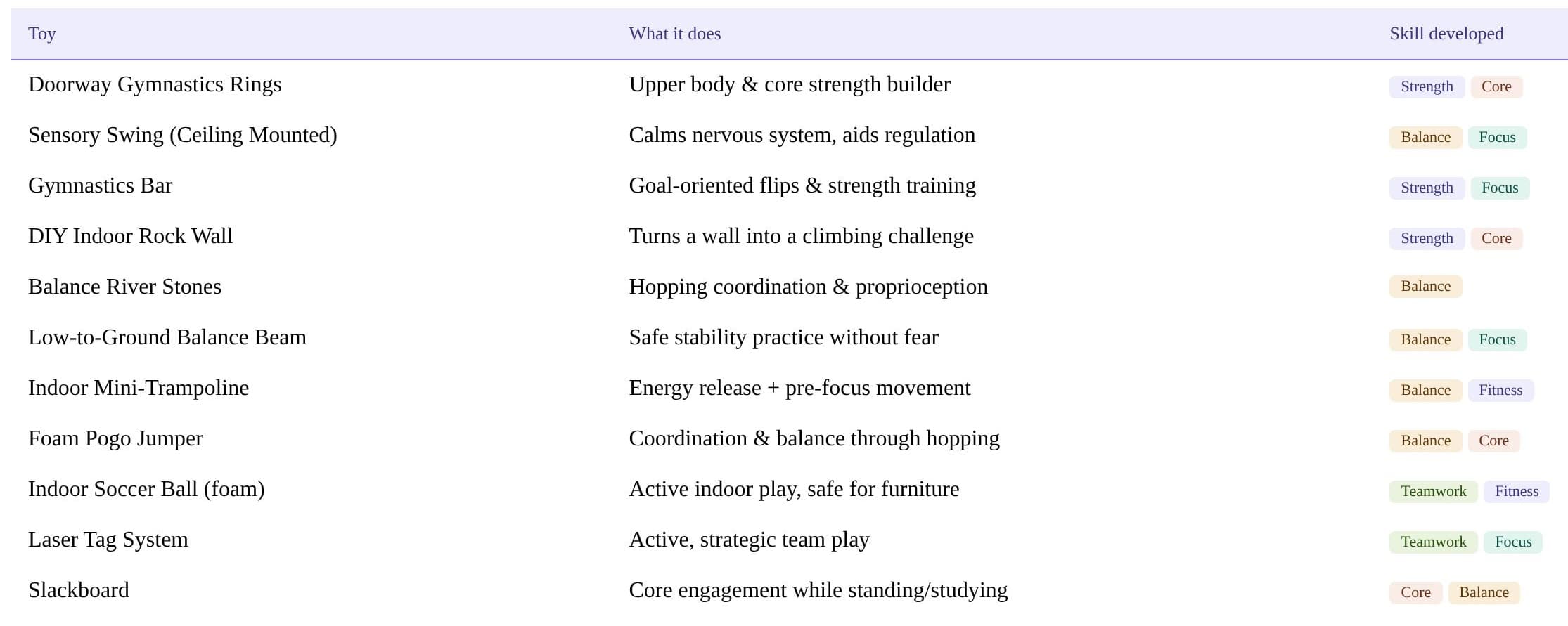
Doorway Gymnastics Rings are low-effort to set up and high-return in terms of physical development. Kids who swing, hang, and work on ring strength are building upper body and core muscles that support everything from posture to handwriting.
Sensory Swing (Ceiling Mounted) is particularly useful for kids who struggle with regulation. The rhythmic movement calms the nervous system, which sounds counterintuitive but is supported by how the vestibular system works. For kids with sensory processing differences or ADHD, a sensory swing can make a significant difference in how they move through their day.
Gymnastics Bar gives kids a goal-oriented physical challenge. Learning to do a pull-over or a back hip circle takes practice, focus, and repetition, which is exactly the kind of effort kids this age benefit from.
DIY Indoor Rock Wall Hand Holds turn a plain wall into something worth climbing. Kits come with the holds and the hardware, and you get to decide the configuration. It's one of the few home setups that genuinely rivals what you'd find at an indoor playground.
Stepping and Balance River Stones look decorative but function as a coordination challenge. Kids hop between them, trying to stay balanced and maintain a path, good for proprioceptive development and entertaining enough that they'll keep going back to it.
Low-to-Ground Balance Beam offers a safe way to practice stability. The low height removes the fear factor and lets kids focus entirely on the skill. Once they master walking forward, they'll start creating their own challenges, walking backward, holding something, closing one eye.
Indoor Mini-Trampoline is the kind of investment that pays off over years. Unlike large outdoor trampolines, the indoor version fits in a bedroom or basement and becomes a go-to energy release tool. Five minutes on it before homework can genuinely improve a child's ability to sit and focus.
Foam Pogo Jumper is simple, affordable, and wildly entertaining. Kids balance on the foam ring and hop around, which requires concentration, balance, and effort, even if it doesn't feel like exercise.
Indoor Soccer Ball with a foam or soft material lets kids kick, dribble, and play without wrecking the furniture. It's a low-barrier way to stay active and, if you have more than one kid, it becomes an instant game.
Laser Tag System turns the whole house into an arena. Kids run, hide, strategize, and work together or against each other. It's active, social, and genuinely fun in a way that holds attention for extended sessions.
Slackboard is a balance board built for core engagement. Standing on it while doing anything, watching something, talking, thinking, forces constant small adjustments that strengthen the core and improve posture over time.
Best Board and Card Games for Kids
Active toys handle the physical side. Board and card games handle something else, the mental and social side that's just as important. Good games teach kids how to think strategically, wait their turn, handle losing gracefully, and work with other people toward a shared goal. These are not small things.
The best board games also have a secondary quality: they're actually fun for adults too. Nobody wants to play a game they're just tolerating for the sake of the kids.
Board and Card Games for Preschoolers
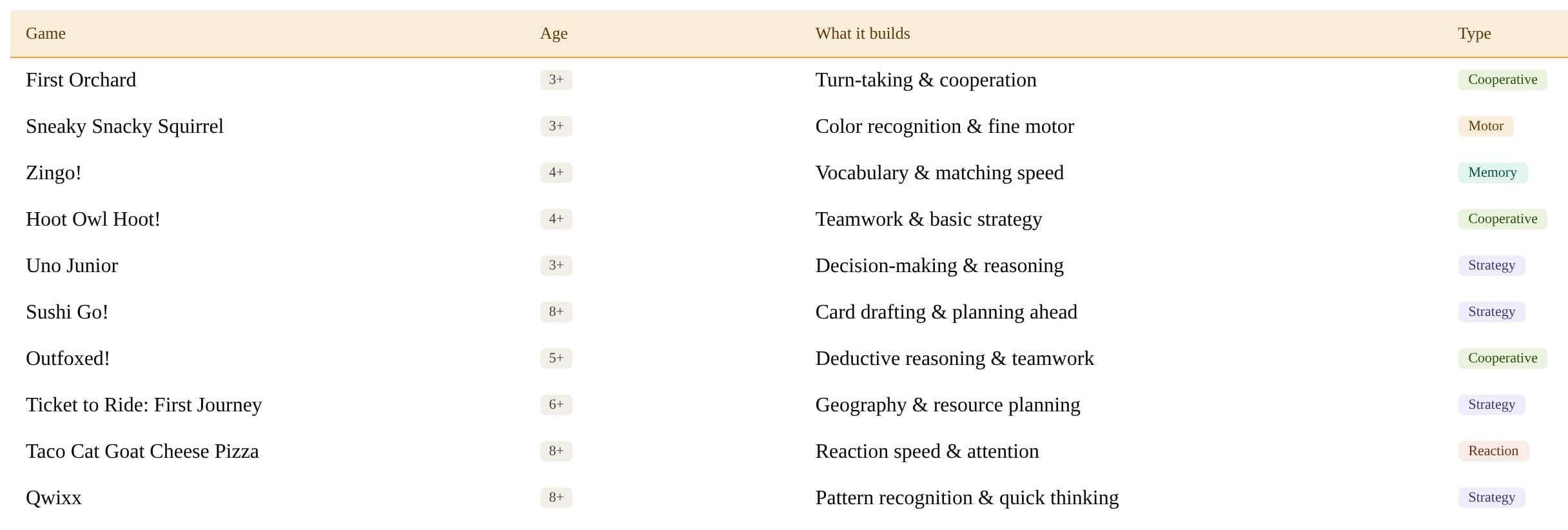
First Orchard is a cooperative game, which means everyone wins or loses together. For preschoolers, this removes the pressure of competition and focuses them on working as a team. It teaches turn-taking in a context that feels meaningful rather than arbitrary.
The Sneaky, Snacky Squirrel Game works on color recognition and fine motor skills simultaneously. Kids use a squirrel-shaped squeezer to pick up acorns and sort them by color, it's tactile, visual, and just challenging enough to hold attention without frustrating anyone.
Zingo! plays like a faster, more energetic version of bingo. Kids race to match tiles to their cards, which builds vocabulary and matching skills. It moves quickly enough that even fidgety preschoolers stay engaged.
Hoot Owl Hoot! is another cooperative option that works beautifully for kids who struggle with losing. The owls all need to get home before sunrise, and everyone plays together to make it happen. It introduces basic strategy without making it feel like work.
Uno Junior simplifies the classic without dumbing it down. The mechanics are easier to grasp, but kids still have to think about what they're playing and when, which is exactly the kind of low-stakes decision-making that builds reasoning skills.
Board and Card Games for Older Kids
Sushi Go! is fast, funny, and genuinely strategic once you start playing it seriously. Players draft cards from a rotating hand, trying to collect the best combination. It moves quickly, which keeps attention, and the decision-making layer rewards thinking ahead.
Outfoxed! is a cooperative detective game where players work together to figure out which fox stole a pot pie before the culprit escapes. It introduces deductive reasoning in a context that's compelling rather than dry.
Ticket to Ride: First Journey makes geography feel like an adventure. Kids collect colored cards and use them to claim train routes across a map. It teaches planning, patience, and the basics of resource management, without feeling like a lesson.
Taco Cat Goat Cheese Pizza is pure chaos in the best possible way. Players flip cards and race to slap the pile under specific conditions. It's a reaction game that's genuinely hilarious and impossible to play without laughing.
Qwixx is a dice game that plays in about fifteen minutes. Players roll dice and try to cross off numbers on their score sheets strategically. It builds quick thinking and pattern recognition and works just as well with two players as with six.
For more family activity ideas that work year-round, the combination of physical play and good board games covers a lot of ground.
10 Brain-Boosting Indoor Activities for Curious Toddlers
Why Playtime Supports Brain Development
Play isn't a break from learning, it is the learning. When toddlers play, they're building memory, developing language, solving problems, and forming the neural pathways that everything else in their development depends on. The activities that look the most like play are often doing the heaviest cognitive lifting.
The good news is that none of this requires expensive equipment or elaborate setups. Most of the best brain-boosting activities for toddlers use things already in the house.
10 Indoor Activities That Fuel Cognitive Growth
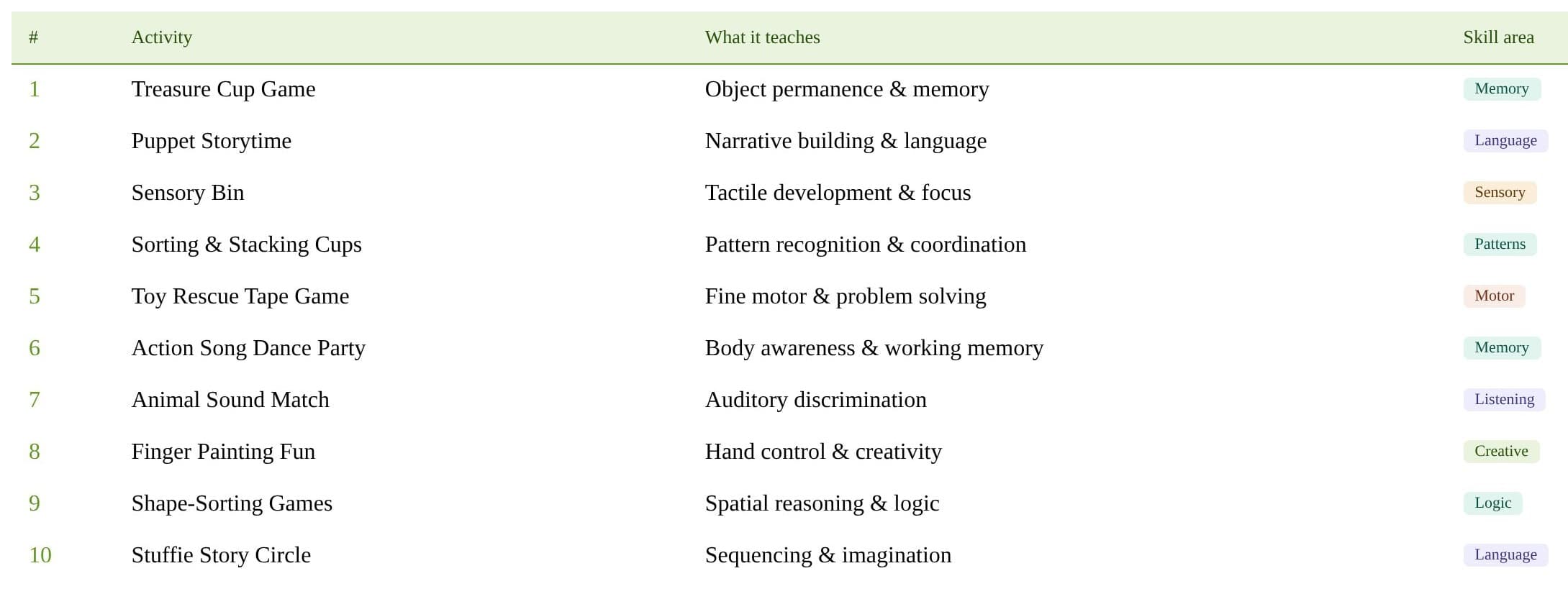
1. Treasure Cup Game, Hide a small object under one of three cups and shuffle them around while your toddler watches. Then let them guess which cup it's under. This is object permanence in action, the understanding that things exist even when they can't be seen. It's also the foundation for memory development.
2. Puppet Storytime, Give your child a couple of hand puppets and let them run the show. The stories they create reveal how they're processing the world. Encouraging narrative play, even the wildest, most illogical stories, builds language skills and imagination simultaneously.
3. Sensory Bin, Fill a container with rice, dried beans, kinetic sand, or water beads and let your toddler dig in. Add small toys, scoops, and cups. Sensory bins support tactile development, focus, and calm. They're one of those activities that buys parents a genuine 30 to 45 quiet minutes.
4. Sorting and Stacking Cups, Give a toddler a set of nesting cups and watch what they do. They'll sort by size, stack, knock down, and start over. This is pattern recognition and problem-solving happening in real time.
5. Toy Rescue Tape Game, Stick small toys to a table or tray using painter's tape and let your toddler "rescue" them by peeling the tape off. It sounds simple but works the fine motor muscles in the fingers and hands that are still developing, the same ones they'll use for writing.
6. Action Song Dance Party, Songs that include movements like "Head, Shoulders, Knees and Toes" or "If You're Happy and You Know It" build body awareness and listening comprehension at the same time. Following the sequence builds working memory.
7. Animal Sound Match, Show your toddler pictures of animals and make the sounds. Then cover the pictures and make a sound and see if they can identify the animal. It's a listening game that improves auditory discrimination, a skill that directly supports early reading.
8. Finger Painting Fun, The tactile experience of painting with fingers engages sensory processing and builds the kind of hand control that translates into later drawing and writing. The creative element matters too, toddlers who are encouraged to make their own choices about color and mark-making develop confidence in their own ideas.
9. Shape-Sorting Games, Classic shape sorters work on spatial reasoning and problem-solving. The process of figuring out which shape goes in which hole, and then rotating it until it fits, is genuinely complex cognitive work for a young brain.
10. Stuffie Story Circle, Gather a few stuffed animals and take turns telling a story about them. Start the story and then pass it to your child to continue. This builds narrative sequencing, imagination, and the ability to hold ideas in mind while building on them.
Smart Snacks for Brain Development
Cognitive play runs better when kids are fueled properly. Protein supports brain and muscle growth. Iron is critical for neurological development and concentration, low iron is actually one of the less obvious reasons some kids struggle to focus. Zinc supports immune function. Choline, found in eggs, supports memory formation. B vitamins convert food into the energy the brain needs to stay sharp. None of this has to be complicated, eggs, whole grains, beans, and fresh fruit cover most of it.
Exercises for Focus and Attention
Impact on Learning and Academic Performance
A child who can't focus isn't necessarily being difficult, they're often just dysregulated. Focus is a skill that develops with practice and support, not something kids either have or don't. And the research is consistent: kids who have stronger attention and focus skills perform better academically, handle frustration more effectively, and navigate social situations with more ease.
The connection between physical activity and cognitive focus is one of the better-supported findings in child development research. Movement, especially rhythmic, patterned movement, organizes the nervous system in ways that make sustained attention more accessible.
What Impacts Focus and Attention in Kids?
Sleep is probably the biggest variable. A child running on inadequate sleep will struggle to regulate attention no matter what else is in place. Diet matters too, blood sugar swings create focus crashes. Screen time affects the brain's dopamine regulation in ways that make low-stimulation tasks feel unbearable by comparison. And physical activity has a direct, measurable impact on attention and executive function.
These focus activities for kids don't replace the basics, but they do add up.
Simple Focus Exercises
Sensory Ball Exercises, Rolling, squeezing, or tossing a soft ball back and forth requires attention tracking and physical coordination simultaneously. For kids who need to move to think, this kind of paired activity is more effective than asking them to sit still and concentrate.
Movement Exercises, Jumping jacks, stretching sequences, and crawling patterns all engage the cross-lateral movements, right arm with left leg, for example, that activate both hemispheres of the brain. A five-minute movement break before a focused activity can dramatically improve how long a child sustains attention afterward.
Core Exercises, Planks, bear crawls, and wall sits strengthen the core, which is directly connected to postural stability. Kids who struggle to sit upright at a desk often have weak core muscles, addressing this physically makes the sitting task easier.
Active Listening Exercises, Games like simon says toy are deceptively effective at building attention. The game requires the player to hold a rule in mind (only follow the instruction when "Simon says" precedes it), track verbal input, and suppress the impulse to respond to commands that don't qualify. That's exactly the skill set attention exercises are trying to build.
30 Fun and Engaging ADHD Activities for Kids
ADHD doesn't mean a child can't focus, it means their nervous system needs a different kind of input to get there. The best games for adhd kids are not the ones that demand stillness and silence. They're the ones that give kids a meaningful outlet for their energy while building the skills that ADHD tends to make harder: planning, impulse control, working memory, and emotional regulation.
After-School Activities
Martial arts consistently shows up as one of the games to help with adhd because the structure is clear, progress is tangible, and the physical demands are high enough to engage a restless nervous system. Team sports do similar work, the social element adds motivation that individual exercise often lacks. Music classes and dance have also shown benefits for attention and executive function, likely because they require sustained engagement with pattern and sequence.
Outdoor Activities
When weather allows, bike riding, nature walks, and park visits are among the best activities for ADHD management. The combination of physical exertion, fresh air, and varied sensory input is genuinely regulating. Even a twenty-minute walk changes the chemistry of the brain in ways that improve focus for hours afterward. For ideas beyond the backyard, family road trips offer a natural way to build in movement and exploration across longer stretches of time.
Energy-Burning Games
Jump rope is underrated. It requires rhythm, coordination, and sustained effort, all while burning the kind of energy that would otherwise find a less helpful outlet. Obstacle courses built from cushions, chairs, and whatever's around the house give kids a physical goal with a clear sequence, which is exactly the kind of structured challenge ADHD brains tend to respond well to. Hide and seek remains effective because it builds patience, planning, and the ability to sustain a quiet waiting state.
Indoor Activities
Balloon games, keeping a balloon in the air, batting it between partners, setting up a net, are low-cost, high-energy, and safe indoors. adhd games like jenga games require steady hands, planning ahead, and impulse control, pulling the wrong piece at the wrong time ends the game, which creates natural, consequence-driven practice at regulation. The hasbro simon game, including the simon electronic game and simon swipe variants, builds working memory and sequential recall in a format that feels like pure play. Even the pocket simon or mini simon versions are effective focus activities for kids who need something portable. The free simon game versions available as apps offer a digital alternative.
Connect four game and its variations, including connect 4 frenzy, connect 4 flip, and connect 4 pop out, are solid strategic games for kids who need structured challenge. The connect four game board forces players to think several moves ahead while tracking the opponent's strategy. Games like connect 4 yard game or the wooden connect 4 game version scale up the stakes and make the challenge feel more significant. The connect 4 game board is simple enough to learn in two minutes and strategic enough to hold attention indefinitely.
The jenga games category offers similar impulse-control training. How many blocks are there in jenga? A standard set includes 54 blocks, and the game dates back to the 1970s, how old is jenga as a concept is a question kids often ask once they discover it exists. Jenga play online options and the jenga twister variant offer digital and hybrid versions for families who want more flexibility.
Board games labeled as best games for adhd tend to share certain qualities: they're fast-moving enough to maintain engagement, they involve physical components that give fidgety kids something to do with their hands, and they build skills through repetition that feels like play rather than practice.
DIY projects deserve a spot on this list. Building something, a birdhouse, a simple robot from cardboard, a LEGO set with actual instructions, gives ADHD kids a structured creative challenge with a satisfying payoff. The focus required is genuine, and the sense of accomplishment is real.

Supporting Little Minds: Mental Health Activities for Kids
Why Mental Health Activities Matter
Physical health and mental health aren't two separate categories, especially in children. A child who's anxious, overwhelmed, or emotionally dysregulated will struggle to learn, play, and connect with others. Building emotional literacy and healthy coping strategies in childhood doesn't just help kids feel better now, it shapes how they handle stress, relationships, and setbacks for the rest of their lives.
Mental health activities for kids don't need to be clinical or heavy. The best ones are woven into play.
Creative Activities
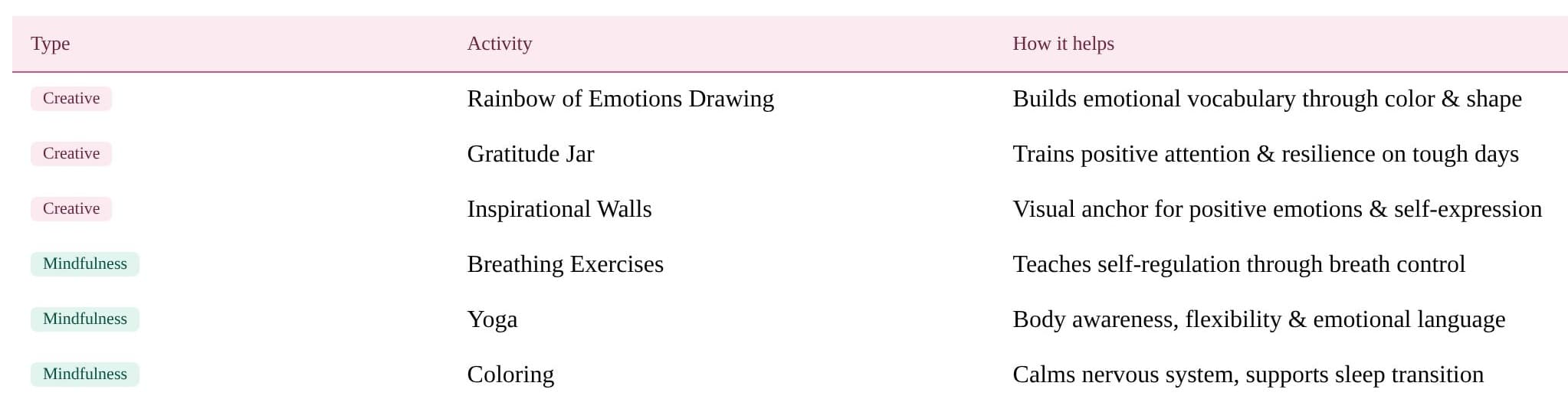
Rainbow of Emotions Drawing, Give kids paper and crayons and ask them to draw what their feelings look like using colors and shapes. This is an accessible entry point for emotional vocabulary, particularly for kids who find it easier to show rather than tell.
Gratitude Jar, Keep a jar in the kitchen and add slips of paper with things to be thankful for throughout the week. Reading them back on tough days builds the habit of finding good things even when the mood is low.
Inspirational Walls, Let kids fill a section of wall or a corkboard with drawings, quotes, and images that make them feel good. It becomes a visual anchor for positive emotions and a creative project that keeps evolving.
Mindfulness Activities
Breathing Exercises, Teaching a child to breathe through a moment of overwhelm is a skill that goes with them everywhere. Box breathing, belly breathing, and the simple practice of taking three slow breaths before reacting are tools that compound in usefulness over time.
Yoga, Child-friendly yoga sessions improve flexibility and focus while also teaching body awareness and self-regulation. The poses give kids physical language for emotional states, grounded, stretched, balanced, that carries into how they think about their feelings. Poor sleep schedules and lack of movement are often linked, yoga is one activity that bridges both.
Coloring, There's a reason adult coloring books became a phenomenon: the rhythmic, contained focus of coloring genuinely calms the nervous system. For kids, it works even better. Structured coloring time before bed can ease the transition from the stimulation of the day to the quiet of sleep.
5 Indoor Exercises to Keep Your Brain Sharp
The brain responds to physical activity the same way muscles do, it grows stronger with the right kinds of exercise. These five indoor exercises work for kids and adults, which makes them useful for family movement sessions.
Dancing is one of the best brain exercises available. It combines physical movement with rhythm, coordination, and often social engagement. Freestyle dancing in the kitchen counts. Choreographed dance challenges count more.
Yoga shows up again because it earns its place. The combination of controlled movement, breath, and focus makes it one of the few physical activities that directly targets both the body and the mind simultaneously.
Resistance training adapted for kids, push-ups, squats, lunges, builds physical strength while also requiring the kind of internal counting, pacing, and regulation that strengthens executive function.
Aerobic exercises, anything that raises the heart rate for a sustained period, increase blood flow to the brain and have been consistently linked to improved memory, attention, and processing speed. Even ten minutes matters.
Standing desk activities, for kids who do homework or creative work at a desk, doing it standing up rather than sitting increases alertness and engagement. The subtle physical demand of maintaining balance while standing keeps the nervous system active enough to support concentration.
The Quiet Reward of Hard Play
Active play looks messy from the outside. There's noise, there's chaos, there's a cushion pyramid in the middle of the living room that someone's definitely going to have to take apart before bedtime. But what's happening underneath all of that is real.
Kids who play hard, physically, mentally, creatively, build resilience. They learn that effort produces results, that failure is information rather than identity, and that doing something difficult with someone else creates a specific kind of connection that nothing else replicates. The board games, the balance beams, the sensory bins, the gratitude jars, they're all building the same thing: a child who knows how to engage with the world.
At Little Groovers, we believe active kids become confident adults. That's not a slogan, it's the reason behind every recommendation we make. If you've found something in this guide that helps, bookmark it, share it, or come back to it when you're looking for something new to try. There's always more to explore at Little Groovers.
Frequently Asked Questions
1. What are the best indoor toys for kids?
Active toys like trampolines, balance boards, and climbing sets are best for keeping kids physically engaged. Combine them with sensory toys and creative tools for a well-rounded indoor setup.
2. How can I keep my child active indoors?
Movement-based games, obstacle courses built from furniture and cushions, and active toys like foam pogo jumpers or gymnastics bars work well. The key is variety, kids disengage when the same option is always available.
3. Are indoor trampolines safe for kids?
Yes, when they come with safety handles and are used with adult supervision. Look for models designed specifically for indoor use, which tend to have lower bounce profiles and more stable bases.
4. What toys improve brain development?
Educational games, sensory toys, puzzles, and open-ended play materials like building blocks or art supplies all support cognitive development in different ways.
5. How much indoor activity do kids need daily?
At least 60 minutes of physical activity per day is the general recommendation. This doesn't have to happen all at once, shorter bursts of active play throughout the day add up.
6. What are the best games for family time?
Board games like Sushi Go!, Ticket to Ride: First Journey, and Outfoxed! work well across age ranges. The hasbro simon game and connect four game are classics that hold up for family play sessions.
7. Can indoor play replace outdoor play?
It supports it, but not fully. Outdoor play provides sensory input, sunlight, and physical scale that indoor environments can't replicate. Think of indoor play as a supplement, not a substitute. If you're looking for structured outdoor options, check out indoor playgrounds in Calgary that bridge the gap.
8. What activities help kids focus better?
Yoga, sensory play, active listening games like simon says, and movement breaks before focused tasks are all effective. Consistent sleep and a low-sugar diet also make a measurable difference.
9. Are sensory toys good for all kids?
Yes. Sensory toys support tactile development, calm behavior, and emotional regulation across a wide range of developmental profiles. They're particularly helpful for kids with sensory processing differences, but they benefit all children.
10. What makes Little Groovers different?
Little Groovers focuses on active, educational, and genuinely fun play solutions designed around how children actually develop, not just what's popular. Every recommendation is made with real child development in mind.