Iron does not get talked about enough. Not like protein, not like vitamin D, not like the trendy superfoods that cycle in and out of every wellness conversation. But iron? Iron is quietly doing some of the most important work in your entire body, every single day, and when you do not have enough of it, everything starts to fall apart in ways that are easy to miss until they are impossible to ignore.
If you have been feeling tired without a clear reason, if you get winded doing things that used to feel easy, if your skin looks a little pale and your head feels foggy by midafternoon, there is a real chance your iron levels are low. And you are far from alone. Iron deficiency is one of the most common nutritional gaps in the world, and it affects more people than most of us realize, including children, women, vegetarians, and anyone who just is not paying close attention to what they eat.
The good news is that food is genuinely powerful here. You do not need to overhaul your entire life or start taking handfuls of supplements. You just need to know which foods are high in iron, how to eat them in a way that actually lets your body absorb that iron, and which habits might be working against you without you even knowing it.
This guide covers all of it. By the end, you will know exactly what foods to eat, how to combine them, when to worry, and how to build a daily routine that keeps your iron levels where they need to be.
What Is Iron and Why Does Your Body Need It So Much
Iron is a mineral. That is the simple version. The more complete version is that iron is one of the most critical minerals your body uses, and it is involved in processes that affect basically every system you have.
The biggest job iron has is helping your red blood cells carry oxygen from your lungs to every tissue in your body. Inside your red blood cells is a protein called hemoglobin, and hemoglobin literally cannot do its job without iron. When you breathe in, your lungs take in oxygen. Your blood picks up that oxygen and carries it everywhere, from your brain to your muscles to your organs. That entire process depends on iron being present and available.
Beyond that, iron supports your immune system, helps your body produce energy, and plays a role in brain development, which is why getting enough iron during childhood and pregnancy is especially critical.
When you do not have enough iron, your red blood cells cannot carry as much oxygen. Your tissues and organs start getting less than they need. That is when you start feeling tired, weak, and foggy. At its most severe, iron deficiency leads to anemia, which is when your red blood cell count drops low enough to cause serious health problems.
The thing about iron deficiency is that it builds gradually. You probably will not wake up one day and feel terrible overnight. It sneaks up on you, which is exactly why knowing what foods are high in iron and eating them regularly matters so much.
How Much Iron Do You Actually Need
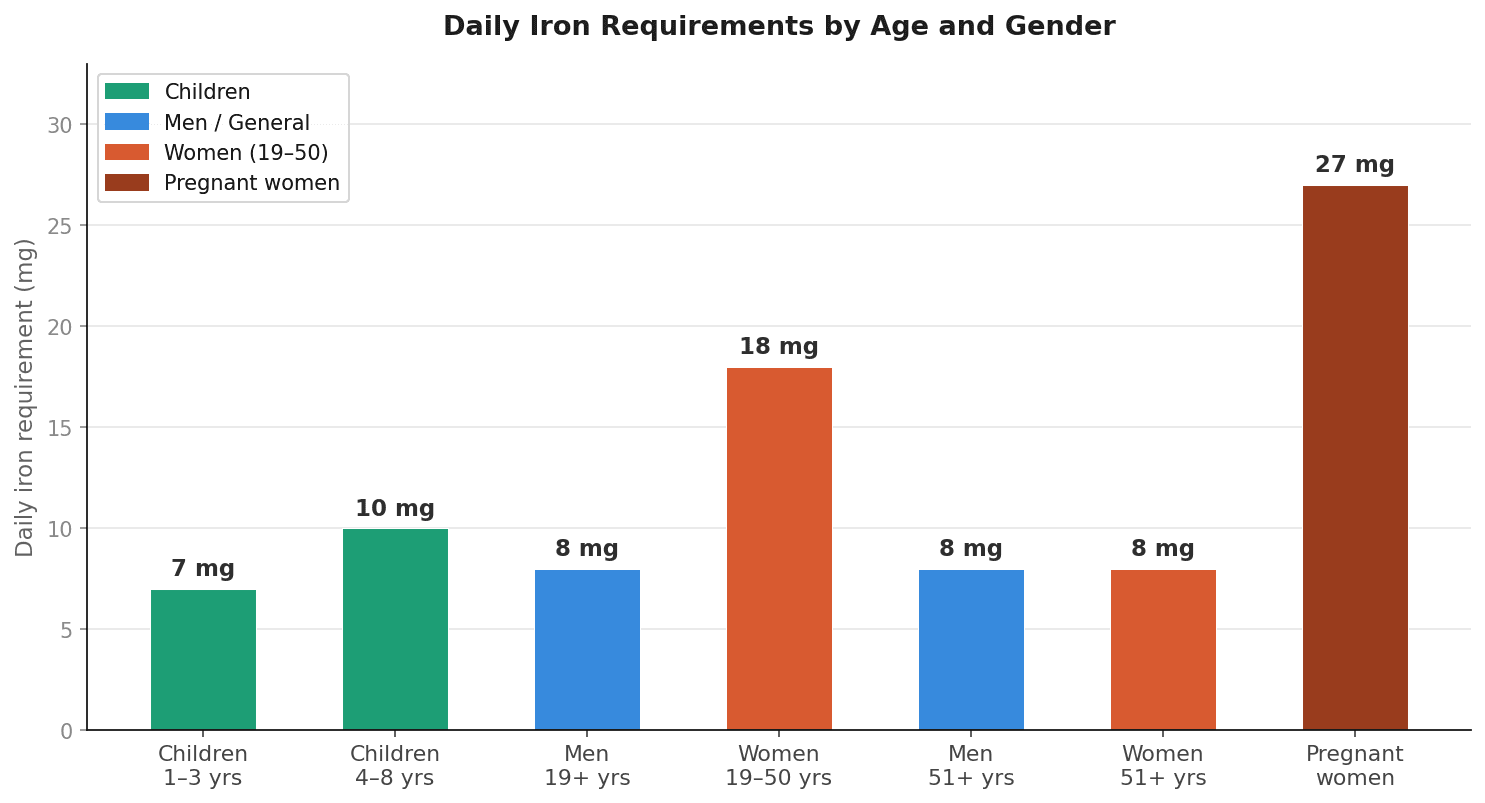
The daily iron requirement varies quite a bit depending on who you are. Age and gender make a significant difference, and so does whether you are pregnant.
Children between one and three years old need around 7 mg of iron per day. Children between four and eight years need about 10 mg. These numbers reflect how fast young bodies are growing and developing.
For adults, the numbers shift. Men over 19 generally need around 8 mg per day. Women between 19 and 50 need significantly more, about 18 mg, largely because of iron lost during menstruation each month. After menopause, the requirement for women drops back to 8 mg.
Pregnant women need the most of all, around 27 mg per day. During pregnancy, the body is supporting not just the mother but a growing baby, and iron demands go up dramatically. This is why iron deficiency is so common during pregnancy and why doctors monitor it closely.
Vegetarians and vegans often need to aim even higher than these numbers because the iron in plant foods is absorbed less efficiently by the body than the iron in animal foods. More on that in a moment.
Heme vs. Non-Heme Iron: Why the Source Actually Matters
Not all iron is the same. There are two types, and the difference between them is important if you want to actually make the most of what you eat.
Heme Iron
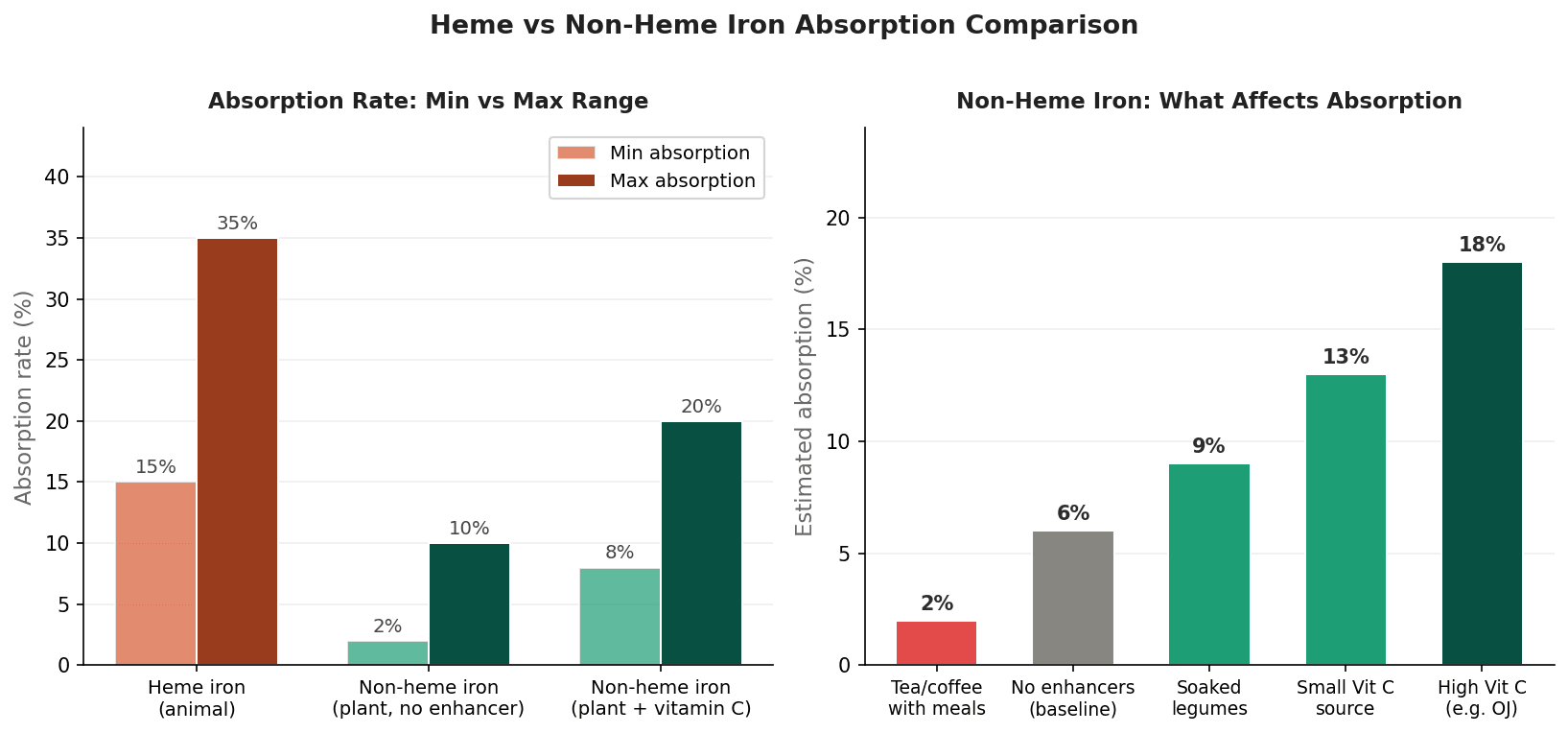
Heme iron comes from animal sources. It is found in red meat, poultry, fish, and seafood. What makes heme iron special is how efficiently the body absorbs it. Your digestive system can absorb somewhere between 15 and 35 percent of the heme iron you eat. That is a strong absorption rate compared to the other type.
Non-Heme Iron
Non-heme iron comes from plant-based foods, like lentils, spinach, beans, and fortified cereals. The body absorbs this type less efficiently, typically somewhere between 2 and 20 percent. Several factors affect where in that range you land, including what else you eat at the same meal.
This does not mean plant-based iron is not valuable. It absolutely is. But it does mean that people who rely entirely on plant foods for their iron need to be more intentional about how much they eat and what they pair it with. That is where the diet strategy side of things becomes really important, and we will get into that fully a little later.
What Foods Are High in Iron
This is the heart of it. Knowing which foods are good sources of iron is the first step to actually getting enough of it.
Animal-Based Iron Sources
Red Meat
Beef and lamb are among the richest sources of heme iron you can eat. A standard serving of beef provides a meaningful chunk of your daily iron needs in a form your body absorbs well. Grass-fed beef tends to be nutritionally dense overall, though both grass-fed and grain-fed provide solid iron content.
Lamb offers similar benefits. If you eat meat regularly, working beef or lamb into your weekly meals a few times is one of the most straightforward ways to keep your iron levels healthy.
Poultry
Chicken and turkey both contain iron, though at somewhat lower levels than red meat. Dark meat, such as chicken thighs or turkey legs, tends to have more iron than white breast meat. If you are someone who eats chicken several times a week, you are getting a consistent source of iron in a relatively lean form.
Does chicken have iron? Yes, it does. It is not the highest on the list, but it is a reliable everyday source that adds up over time.
Fish and Seafood
Fish like tuna and salmon both contain iron, along with omega-3 fatty acids that benefit your heart and brain. Does tuna have iron? It does. Canned tuna is actually a convenient, affordable option that many people overlook as an iron source.
Beyond fish, shellfish are worth mentioning. Oysters and clams are exceptionally high in iron, often topping charts for iron density per serving. Shrimp also provides a moderate amount. If you enjoy seafood, these are excellent foods to lean into.
Organ Meats
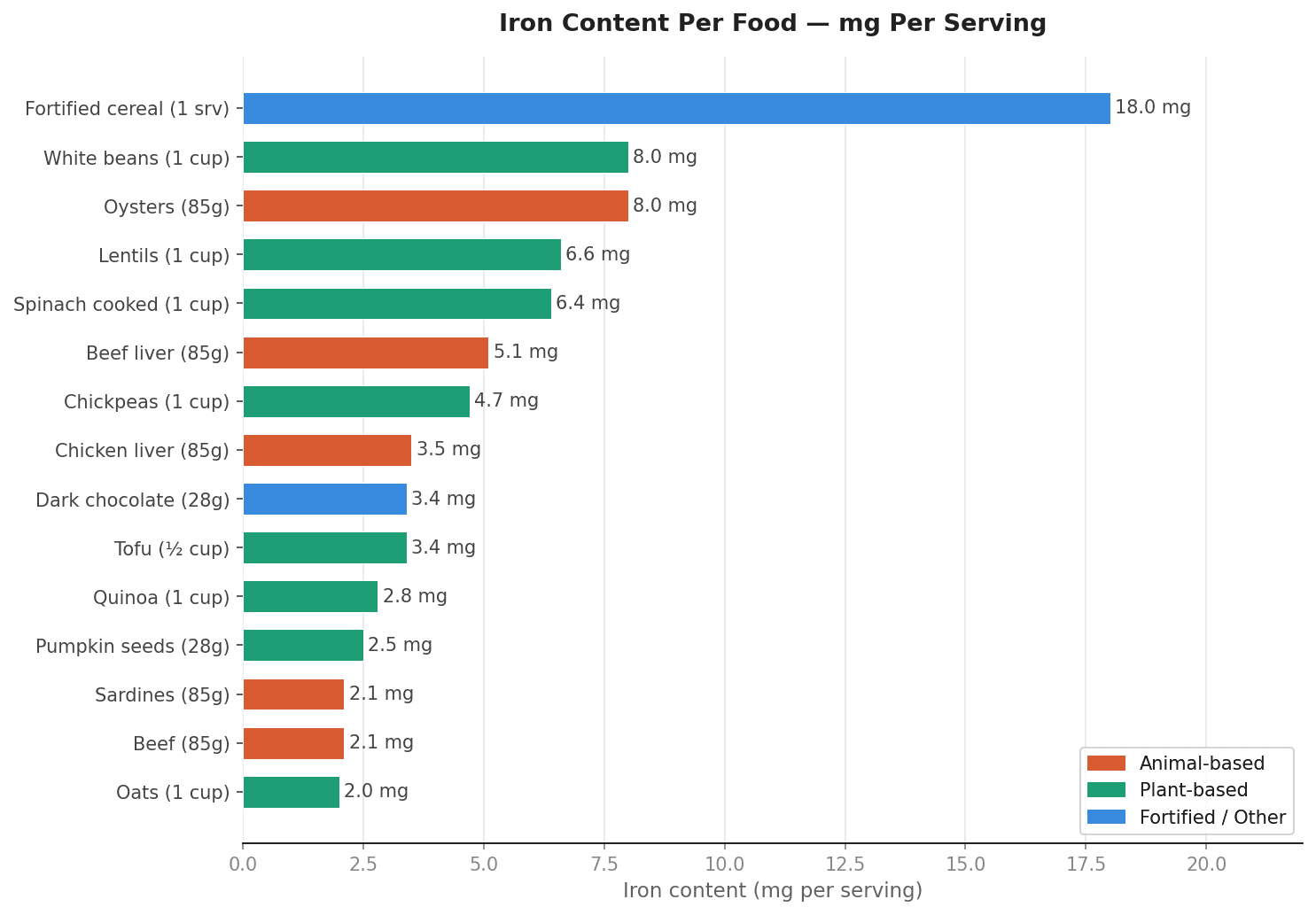
Liver tends to make people hesitate, but from a nutritional standpoint, it is hard to beat. Beef liver in particular is extraordinarily high in iron. A relatively small serving can provide several times your daily requirement. If you can acquire a taste for it, or find ways to incorporate it into dishes where its flavor blends in, it is genuinely one of the most powerful iron-rich foods you can eat.
Chicken liver is milder in flavor than beef liver and still provides impressive iron content.
Plant-Based Foods High in Iron
Getting enough iron on a plant-based diet is absolutely possible. It just takes some awareness about which foods to prioritize and how to eat them.
Legumes
Legumes are the backbone of iron-rich vegetarian eating. Lentils deserve special mention here because they are not just high in iron but also affordable, versatile, and easy to cook. A cup of cooked lentils provides a substantial amount of iron, along with plenty of fiber and protein.
Chickpeas are another strong choice. Whether you eat them roasted as a snack, blended into hummus, or tossed into a salad or curry, chickpeas contribute meaningfully to your iron intake.
Black beans, kidney beans, and navy beans are all solid iron food sources. If beans are a regular part of your diet, you are doing your iron levels a real favor.
Soy Foods
Tofu and edamame both come from soybeans, which are naturally high in iron. Tofu is particularly flexible in cooking since it absorbs flavors well and can be used in everything from stir-fries to smoothies. A serving of firm tofu provides a decent dose of non-heme iron.
Edamame, the young soybeans you find in Japanese restaurants or the freezer aisle, are also a good source and make for an easy snack.
Nuts and Seeds
Pumpkin seeds are quietly one of the best plant-based iron sources available. A small handful packs a surprising amount of iron per serving, which makes them an easy addition to oatmeal, yogurt, or salads.
Sesame seeds and tahini, which is sesame seed paste, are similarly iron-dense. If you use tahini in dressings or dips regularly, you are adding iron to your diet without even thinking about it.
Cashews are among the nuts highest in iron. Hemp seeds are another option worth adding to smoothies or cereal if you are focused on boosting your iron intake from plants.
Leafy Green Vegetables
Spinach has a reputation for being high in iron, and it earns that reputation. Raw spinach contains less than cooked spinach simply because cooking reduces the volume and concentrates the nutrients. Both forms contribute to your iron intake, though cooked spinach is a more efficient way to eat a larger quantity.
Kale is similarly iron-rich and offers the bonus of vitamin C, which, as we will discuss, actively helps your body absorb that iron.
What vegetables are high in iron? Beyond spinach and kale, Swiss chard and collard greens are solid options. These leafy greens are easy to incorporate into meals year-round.
Other Vegetables
Broccoli offers a modest but real iron contribution, and it also contains vitamin C, which gives it a double benefit when you are thinking about iron absorption. Peas, both fresh and frozen, are a good everyday iron source that most people already eat.
High iron vegetables are more common than people realize. Working a variety of them into daily meals is not difficult once you know what to look for.
Fruits High in Iron
Iron-rich fruits tend to be the dried variety. Raisins, dried apricots, and dates all provide meaningful iron content in concentrated form. Because the water has been removed during drying, the iron per gram is higher than in fresh fruit.
Fresh fruits with iron include prunes and mulberries, though the amounts are more modest. What makes fruits valuable in the iron conversation, beyond their direct iron content, is their vitamin C. Citrus fruits, strawberries, kiwi, and guava are all high in vitamin C, and eating them alongside iron-rich foods significantly improves how much of that iron your body actually absorbs.
Does avocado have iron? Avocado contains a small amount of iron along with healthy fats that support overall nutrient absorption. It is not a primary iron source, but it is not nothing either.
Whole Grains
Oats, brown rice, and quinoa all contribute to iron intake. Quinoa is worth highlighting specifically because it contains more iron than most grains and is also a complete protein, meaning it provides all essential amino acids. It is a particularly strong choice for vegetarians and vegans.
Oatmeal for breakfast is a practical way to start the day with some iron already counted, especially if you top it with pumpkin seeds and dried fruit.
Fortified Foods
Iron fortified foods are a real and underrated part of how many people meet their daily needs. High iron cereal options are widely available and often straightforward to read on a label. Many breakfast cereals are fortified with 100 percent of the daily value for iron per serving. If you eat fortified cereal in the morning, you may be getting a significant portion of your daily iron before lunch.
Fortified plant milks and some breads also contain added iron. Checking labels for iron fortification is a habit worth building, especially if you are vegetarian or trying to increase your iron intake without major dietary changes.
Dark Chocolate
This one surprises people. Dark chocolate, particularly varieties with a high cocoa percentage, contains a notable amount of iron. It is not something to eat by the pound, but if you enjoy a square or two of dark chocolate as a treat, you are getting a small iron bonus along with antioxidants.
How to Read a Food Label for Iron
When you look at the Nutrition Facts label on a packaged food in the US and Canada, iron is listed as a percentage of the Daily Value. Here is a simple way to interpret it:
20 percent or more means the food is a high iron source. Between 10 and 19 percent is moderate. Under 10 percent is low.
This makes it easy to scan a label quickly. If you are looking at a box of cereal and the iron percentage is listed at 90 percent per serving, that is a fortified product that contributes heavily to your daily needs.
How to Increase Iron Absorption: The Details That Make a Real Difference
Eating iron-rich foods is only part of the equation. How much of that iron your body actually absorbs depends heavily on what else you eat at the same time and what habits surround your meals.
Pair Iron with Vitamin C
Vitamin C is the most powerful natural enhancer of iron absorption, particularly for non-heme iron from plant sources. The effect is significant. Eating a vitamin C-rich food at the same meal as an iron-rich food can increase absorption by two to three times or more.
This is why a classic combination like lentil soup with a squeeze of lemon or a glass of orange juice works so well. The lemon or orange provides vitamin C that your body uses to convert the iron into a form it can absorb more easily.
Does vitamin C help absorb iron? Absolutely, and this is one of the simplest, most evidence-backed habits you can build into your eating.
Practical ways to do this: squeeze citrus over salads that contain spinach or chickpeas, eat strawberries alongside oatmeal, add bell peppers to bean dishes, or simply drink a small glass of orange juice with an iron-rich meal.
Avoid Tea and Coffee Around Mealtimes
Tea and coffee contain compounds called tannins, which bind to iron in your digestive tract and make it much harder for your body to absorb. If you drink tea or coffee with your meals, you are potentially cutting your iron absorption significantly.
This does not mean you have to give up your morning coffee or afternoon tea. It just means waiting at least an hour after a meal before having them, or drinking them well before you eat. Herbal teas do not contain the same tannins, so they are generally fine with meals.
Soak Grains and Legumes
Plant foods contain compounds called phytates, which similarly reduce iron absorption. Soaking lentils, beans, and grains before cooking helps break down some of these phytates, which can improve how much iron your body extracts from these foods.
This is an old-school cooking practice that has real nutritional logic behind it. Soaking beans overnight is not just about cooking time. It is genuinely improving their nutritional value.
Be Thoughtful About Calcium Timing
High amounts of calcium taken at the same time as iron-rich foods can interfere with absorption. This does not mean you should avoid calcium, which your body absolutely needs. It just means that if you are taking a calcium supplement or eating a very calcium-heavy meal, spacing it out from your main iron-containing meal by an hour or two is worth doing.
Cook in Cast Iron
Cast iron cookware can actually leach small amounts of iron into food during cooking, particularly acidic foods like tomato-based sauces. This is a minor but real source of additional dietary iron and a simple habit that adds up over time.
Tips for Adding Iron-Rich Foods to Every Meal
Knowing which foods are high in iron is useful. Knowing how to actually get them into your daily eating without it feeling like a chore is where the practical payoff is.
Breakfast Ideas
Start the day with iron-fortified cereal and a glass of orange juice. The combination of fortified iron and vitamin C is genuinely effective and takes no extra effort. Alternatively, make oatmeal and top it with pumpkin seeds, dried apricots, and a handful of berries. A smoothie with spinach, frozen mango, and a tablespoon of hemp seeds blended together is another way to get iron in before you even sit down at a desk.
Lunch Ideas
A lentil soup is one of the most satisfying and iron-dense lunches you can put together. A chicken sandwich loaded with dark leafy greens adds iron from both the meat and the vegetables. A quinoa salad with chickpeas, roasted red peppers, and a lemon dressing checks almost every iron-absorption box in a single bowl.
Dinner Ideas
Grilled beef or lamb alongside a vegetable side dish high in vitamin C covers the bases well. A rice and beans combination, particularly brown rice with black beans, is a classic for a reason. Stir-fried tofu with broccoli, spinach, and a sesame sauce is both high in iron and deeply satisfying. Pasta with a spinach-based sauce or a lentil Bolognese is another family-friendly option.
Vegetarian Meal Options
Vegetarians can absolutely get enough iron. Lentil curry served with quinoa is both delicious and iron-dense. A chickpea salad with lemon dressing and red bell peppers combines iron and vitamin C naturally. Spinach pasta with tofu, pine nuts, and cherry tomatoes is another great option.
The key for iron-rich vegetarian eating is variety and pairing. Eat a range of legumes, nuts, seeds, and leafy greens throughout the day, and pair them consistently with vitamin C sources.
Signs and Symptoms of Low Iron
Understanding what low iron actually feels like in real life is useful because iron deficiency does not always announce itself dramatically.
The most common sign is fatigue. Not just occasional tiredness, but a persistent, heavy kind of exhaustion that does not improve with sleep. If you are sleeping enough and still waking up feeling drained, it is worth considering whether iron might be a factor.
Weakness, particularly in muscles, is another common symptom. Things that used to feel easy, like climbing stairs or carrying groceries, might feel harder than expected.
Pale skin is a classic sign of low iron. This is especially visible in the inner eyelids and the gums, which can look washed out or less pink than usual.
Headaches and dizziness can occur because the brain is not getting as much oxygen as it needs. Shortness of breath with mild exertion is another sign. Cold hands and feet, brittle nails, and difficulty concentrating are all associated with iron deficiency as well.
How do I know if I have low iron? The honest answer is that a blood test is the only reliable way to know for certain. A doctor can measure your hemoglobin, ferritin, and other markers to give you a clear picture of where your iron levels stand. If you have several of the symptoms above consistently, it is worth getting checked.
Iron Deficiency and Anemia: What the Difference Actually Is
Iron deficiency and anemia are related but not exactly the same thing. Iron deficiency means your body's iron stores are low, even if red blood cell production has not been severely affected yet. Anemia, specifically iron-deficiency anemia, is the next stage, where iron levels are low enough that your body cannot produce enough healthy red blood cells.
Iron deficiency can exist without anemia for a period of time. During this phase, symptoms may be mild or subtle. As deficiency progresses to anemia, symptoms become more pronounced and can significantly impact quality of life.
Both conditions are diagnosed through blood tests, and both respond well to increased dietary iron and, when necessary, supplementation under medical guidance.
Who Is Most at Risk for Low Iron
Some groups of people are more vulnerable to iron deficiency than others.
Women of reproductive age are at higher risk because of monthly blood loss during menstruation. Women who have very heavy periods lose more iron each month and need to be especially attentive to their intake.
Pregnant women have dramatically increased iron needs, as we discussed earlier. Iron deficiency during pregnancy can affect both the mother and the developing baby, which is why prenatal care routinely includes iron monitoring.
Children are another high-risk group. Growth requires iron, and children who are picky eaters or who drink a lot of cow's milk (which can interfere with iron absorption) may not be getting enough. Can children have iron deficiency? Yes, and it is more common than many parents realize. A pediatrician can check iron levels if there is any concern, and addressing it early matters because iron plays a critical role in brain development.
Vegetarians and vegans are at elevated risk because non-heme iron from plants is absorbed less efficiently. This does not mean a plant-based diet cannot meet iron needs. It means that plant-based eaters need to be more strategic and consistent in how they approach their iron intake.
People who exercise heavily, particularly endurance athletes, can have higher iron needs because of iron losses through sweat and a condition called foot-strike hemolysis, where the physical impact of running causes some breakdown of red blood cells.
Should You Take Iron Supplements
Iron supplements can be effective and sometimes necessary, but they are not something to start without medical guidance. Unlike many vitamins where excess is excreted without harm, iron accumulates in the body, and too much of it is genuinely dangerous.
Is it safe to take iron supplements daily? It can be, but only at an appropriate dose for your specific situation, which a doctor determines through blood tests. Taking high-dose iron supplements without confirmed deficiency is not recommended.
If you do need supplements, they come in several forms, including ferrous sulfate, ferrous gluconate, and ferrous fumarate. They are typically best absorbed on an empty stomach, though some people find them easier to tolerate with a small amount of food. Taking them with a source of vitamin C improves absorption.
Iron supplements commonly cause digestive side effects, including constipation, nausea, and dark stools. These are usually manageable with dose adjustments or changes in timing.
How long does it take to improve iron levels? With consistent supplementation and dietary changes, ferritin levels often start to improve within a few weeks, but full replenishment of iron stores can take several months. Symptoms of deficiency usually begin to improve before blood tests fully normalize.
Are foods better than supplements for most people? Generally yes. Getting iron from food is safer, more sustainable, and comes with other nutrients that support overall health. Supplements have their place when deficiency is confirmed and dietary iron is not sufficient, but food should always be the foundation.
Can You Get Too Much Iron
Yes, you can. This is why the push to get enough iron should never become an approach of consuming unlimited amounts.
Iron toxicity is rare from food alone in otherwise healthy people, because the digestive system regulates absorption and slows down intake when stores are adequate. However, iron toxicity from supplements is a real concern, and iron overdose, particularly in young children who accidentally ingest iron supplements, can be life-threatening.
Adults with a genetic condition called hemochromatosis absorb iron in excess and need to actively manage their intake. For these individuals, high-iron diets and supplements are not appropriate without medical supervision.
Signs of excess iron include stomach pain, nausea, vomiting, and in more severe cases, damage to the liver and other organs. If you suspect you are taking in too much iron from supplements, speak with a doctor.
When to See a Doctor
Some situations call for professional input rather than a dietary adjustment on your own.
If you have been persistently tired, weak, or short of breath for several weeks without a clear explanation, a blood test is the right next step. If you are pregnant, iron monitoring is part of standard prenatal care and not something to navigate on your own. If you are planning a vegetarian or vegan pregnancy, working with a healthcare provider or registered dietitian from the beginning is smart.
If your symptoms are significant or if blood tests confirm severe deficiency, a doctor may recommend intravenous iron infusion rather than oral supplements. This is typically reserved for cases where oral iron is not tolerated or deficiency is severe enough to require faster correction.
Do not wait until you feel terrible to check your iron levels. Regular checkups that include basic bloodwork are one of the most practical things you can do for long-term health.
Iron Deficiency in Children: What Parents Need to Know
Because Little Groovers is all about supporting healthy families, it is worth spending a moment on this specifically. Iron deficiency in children is one of the most common nutritional problems in pediatric health, and it has real consequences for development.
Children who are iron deficient can struggle with attention, learning, and behavior. They may seem more irritable or easily fatigued than other children their age. In infants and toddlers, iron deficiency can affect brain development in ways that have lasting effects.
The transition from breast milk or formula to solid foods is a critical period for iron. Breast milk is low in iron, so as babies start eating solids, iron-rich foods need to come in consistently. Iron-fortified cereals, pureed meats, and mashed legumes are all age-appropriate early iron sources.
Toddlers who drink large amounts of cow's milk (more than about 24 ounces per day) may be at risk because milk is low in iron and can also interfere with iron absorption, potentially crowding out iron-rich foods.
If you have concerns about your child's iron levels, your pediatrician can do a simple blood test to check. For more on supporting your child's overall health and development, Little Groovers has a range of resources that go deeper on pediatric nutrition and growth. You can also explore our guides on topics like fever and temperature taking in children and baby and toddler sleep schedules by age, both of which cover aspects of child health that connect closely to how well-nourished and rested growing kids are.
And because active kids need iron too, if you are looking for ideas to keep them moving and engaged, check out our roundup of the best indoor playgrounds in Calgary and indoor activities and toys for kids. Kids who play hard burn energy, and energy needs iron to be produced and sustained.
Building an Iron-Rich Diet That Actually Sticks
The information in this guide is only useful if it translates into daily habits. Here is how to think about making this stick practically.
Variety is your best tool. No single food covers everything, and eating the same thing every day gets boring fast. Rotate through different iron sources: red meat a couple of times a week, fish or poultry on other days, and legumes and leafy greens throughout. That variety keeps meals interesting and ensures a broader nutrient profile overall.
Make pairing automatic. Every time you eat a plant-based iron source, pair it with something high in vitamin C. This does not need to be a conscious calculation each time. Once you build the habit of adding lemon to lentil dishes, putting bell peppers in bean salads, or drinking a small glass of orange juice with your oatmeal, it becomes second nature.
Avoid the blockers at the right times. Save your morning coffee for after breakfast rather than during. Wait an hour after an iron-rich meal before drinking tea. These small timing adjustments can make a meaningful difference in how much iron you actually absorb from the food you eat.
Check your labels. If you eat packaged cereals, breads, or plant milks, look at the iron percentage on the label. Many of these foods are fortified and contribute more to your daily intake than you might expect.
Cook with cast iron when it makes sense. It is a small thing, but it is something.
And finally, if you have any reason to think your iron might be low, get tested. Food can fix a lot of things, and dietary changes are genuinely powerful. But a blood test gives you real information to work from, and that is always more useful than guessing.
Key Takeaways
Iron is not complicated, but it does require some attention. Your body cannot make it on its own. It has to come from food. And the gap between eating iron-containing foods and actually absorbing enough iron to meet your needs is filled by how smart your food choices and habits are.
Focus on variety across both animal and plant sources of iron. Pair plant-based iron consistently with vitamin C. Avoid letting tea and coffee block absorption at key moments. Soak legumes and grains when you can. Check labels on packaged foods for iron content.
If you are in a higher-risk group, whether that is women of reproductive age, pregnant, a child in a growth phase, or eating a vegetarian or vegan diet, be more intentional than the average person. Get your levels checked periodically rather than waiting for symptoms to become obvious.
Food is genuinely the best place to start. And for most people, building iron into their regular eating habits consistently is all it takes to stay in a healthy range.
For families thinking about health holistically, iron is one piece of a larger picture. If you are planning family activities and want to keep your kids active and engaged, you can explore ideas like Calgary family activities throughout the year or some of the best family road trip destinations in Canada for those who love to travel together. And if you are ever concerned about child safety in broader ways, Little Groovers also covers important topics like Canada's sex offender registry as part of our commitment to giving Canadian families the information they need to raise kids safely and well.
Frequently Asked Questions
How can I increase iron levels quickly?
The fastest safe way to increase iron from food is to eat heme iron sources like red meat and organ meats paired with vitamin C-rich foods at every meal. Eliminating tea and coffee around mealtimes also helps maximize absorption quickly. If your levels are significantly low, a doctor may recommend supplements or an iron infusion for faster results.
What foods are highest in iron?
Organ meats like liver top the list. Oysters and clams are also extremely iron-dense. Among plant foods, pumpkin seeds, lentils, and white beans are among the highest. Fortified cereals can also provide very high amounts per serving.
What drink is good for iron deficiency?
Orange juice and other vitamin C-rich juices support iron absorption when consumed alongside iron-rich foods. Prune juice is also worth mentioning as it contains iron itself. Avoiding tea and coffee around mealtimes helps keep absorption high.
How do I know if I have low iron?
Persistent fatigue, weakness, pale skin, headaches, dizziness, and shortness of breath are common signs. The only reliable way to confirm iron levels is through a blood test that measures hemoglobin and ferritin. If symptoms are present, see a doctor.
Can vegetarians get enough iron?
Yes, with intention and variety. Lentils, chickpeas, tofu, pumpkin seeds, leafy greens, and fortified foods are all solid iron sources. Pairing plant-based iron consistently with vitamin C foods significantly improves absorption. Some vegetarians may still need supplements, which a doctor can help determine.
Does vitamin C help absorb iron?
Yes, significantly. Vitamin C converts non-heme iron into a form the body absorbs much more easily. Eating vitamin C-rich foods like citrus, bell peppers, or strawberries at the same meal as plant-based iron sources can increase absorption two to three times or more.
What blocks iron absorption?
Tannins in tea and coffee, high calcium foods consumed at the same time, phytates in raw or unsoaked grains and legumes, and certain medications including antacids can all reduce iron absorption. Timing meals and managing these factors helps significantly.
Is it safe to take iron supplements daily?
Daily iron supplementation can be safe at an appropriate dose, but that dose should be determined by a doctor based on blood test results. Taking iron supplements without confirmed deficiency is not recommended because iron accumulates in the body and too much is harmful.
How long does it take to improve iron levels?
With consistent dietary changes and supplementation if needed, symptoms often begin to improve within a few weeks. Ferritin levels and full iron stores typically take three to six months to fully normalize. Sticking with the changes consistently over that period is important.
Can children have iron deficiency?
Yes, and it is more common than many parents expect. Toddlers, rapidly growing children, and picky eaters are at particular risk. Iron deficiency in children can affect brain development, attention, and behavior. Pediatricians routinely screen for it, and parents who have concerns should request a blood test.